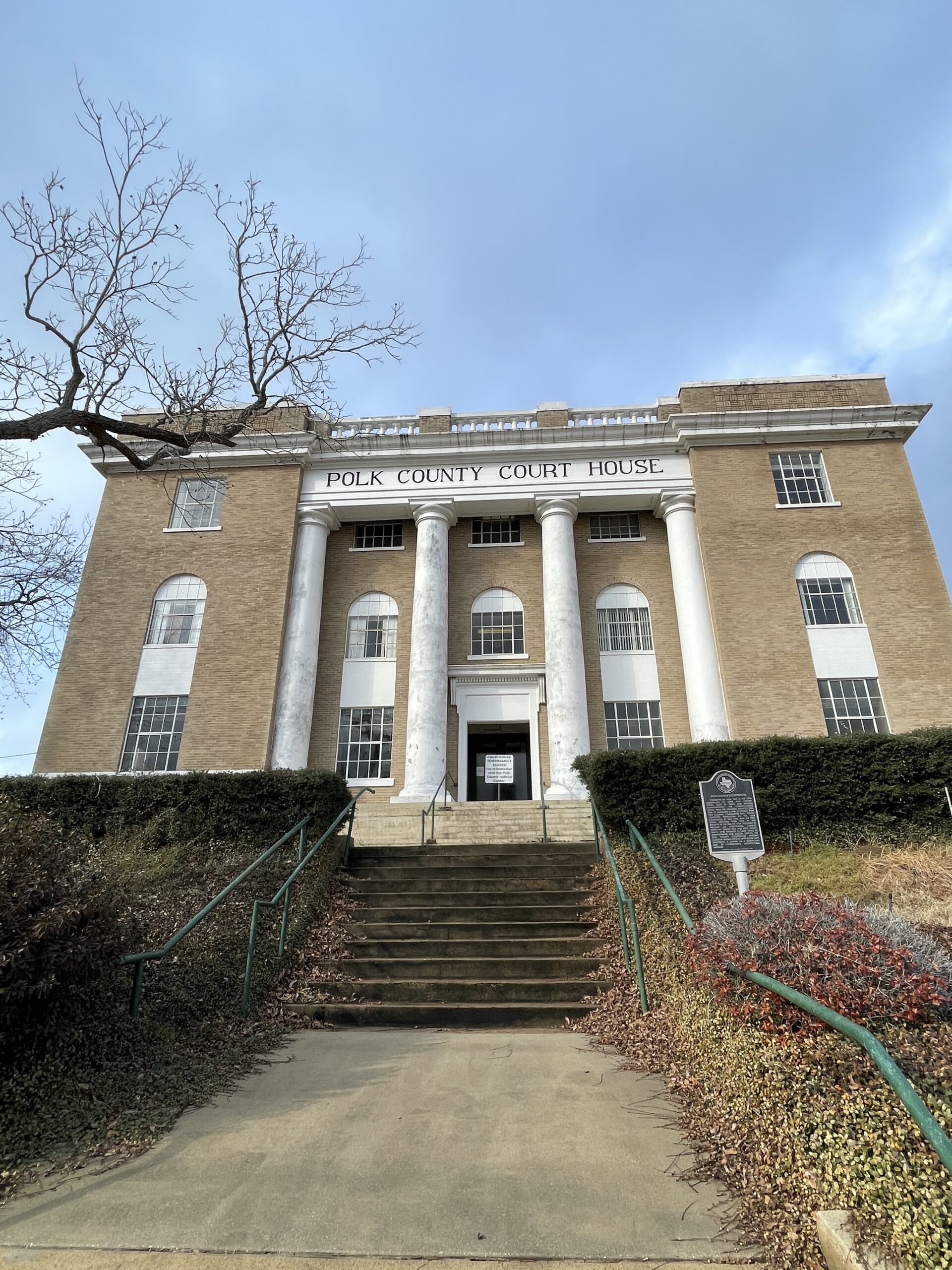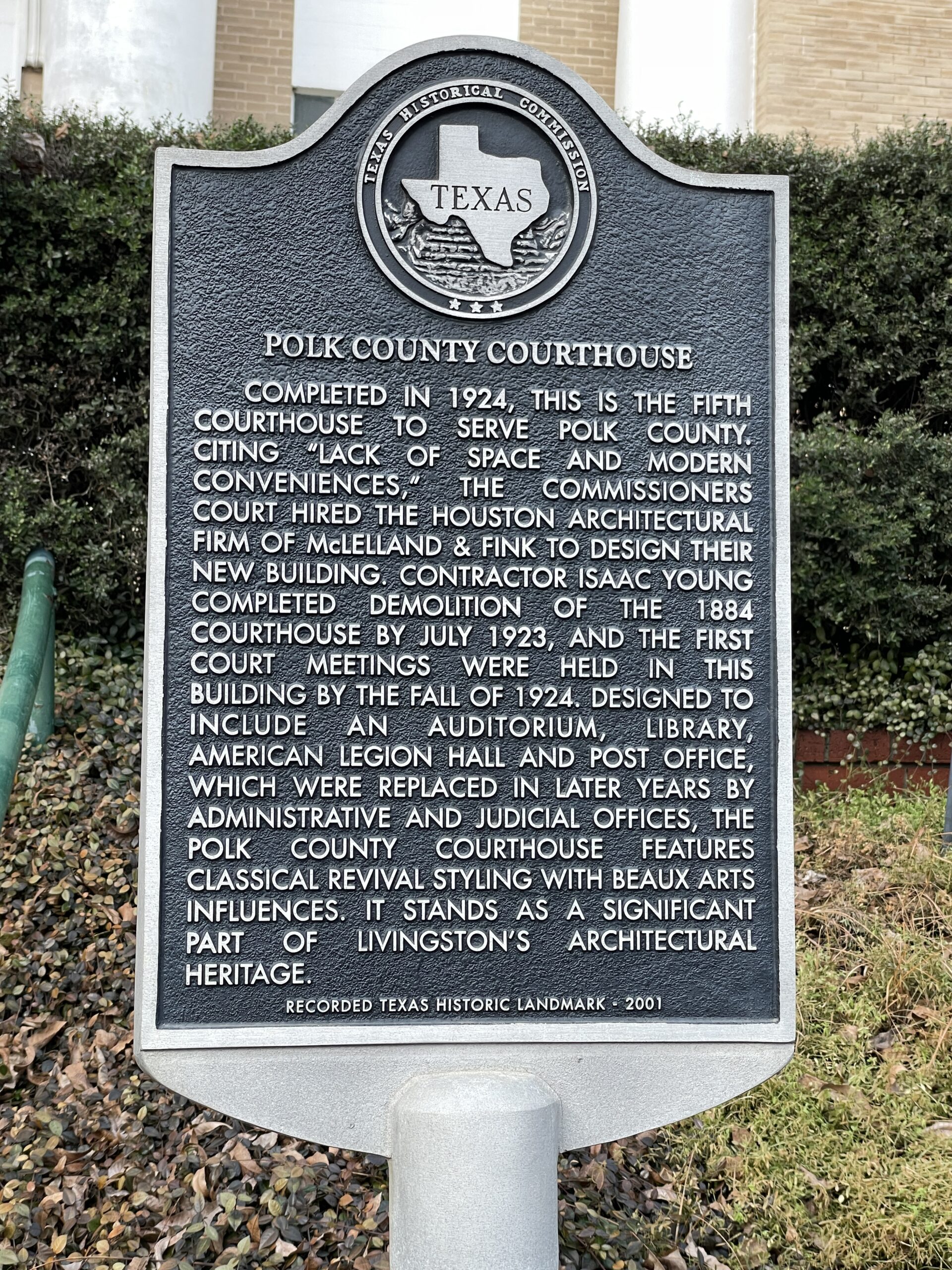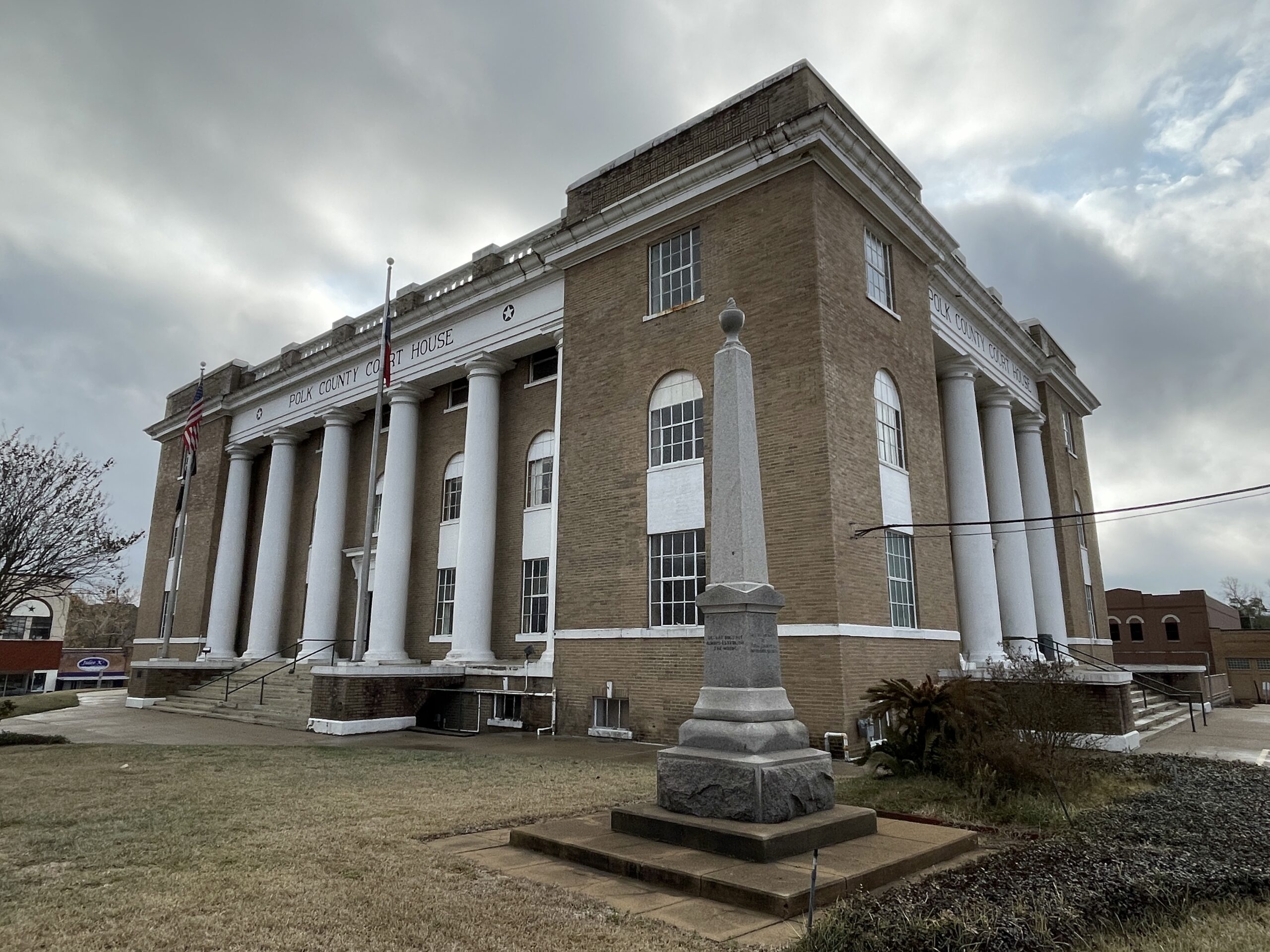


Year Built: 1924
Architect: McLelland and Fink
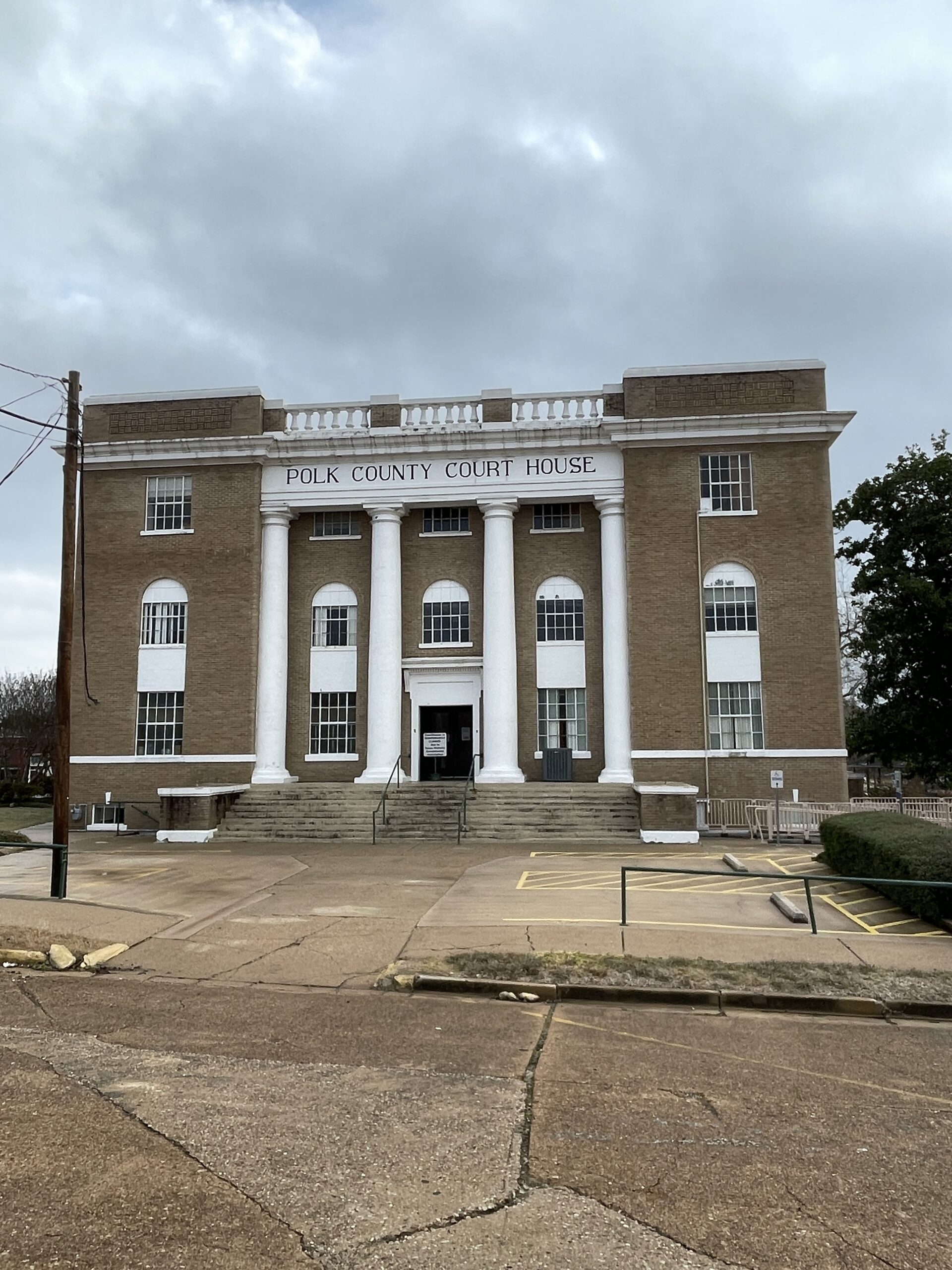
The Polk County Courthouse is located in Livingston, Texas.
“1854, plans were underway for a two-story brick courthouse. It was 40 feet square with a wide hallway and four offices on the ground floor and one large open courtroom upstairs. The ground floor walls were 18 inches thick. The cost of this building was just under $6,000. The courtroom continued to be the meeting place for local Churches and social functions until 1858. In 1884, the court authorized the enlargement and renovation of the brick building and added a new stone facade at a cost of $17,500. The architect for this project was Eugene T. Heiner and the builder was W.C. Wells.
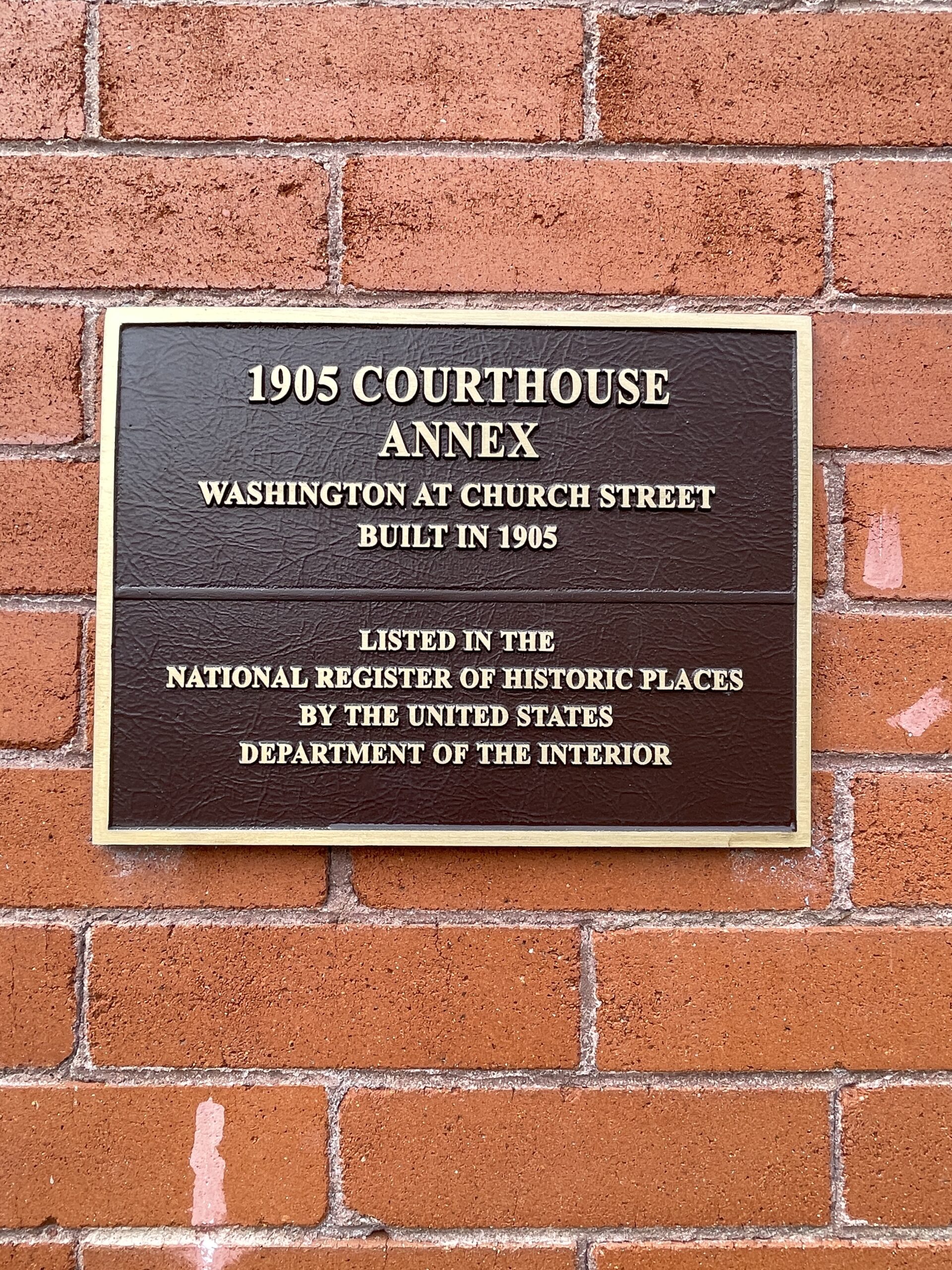
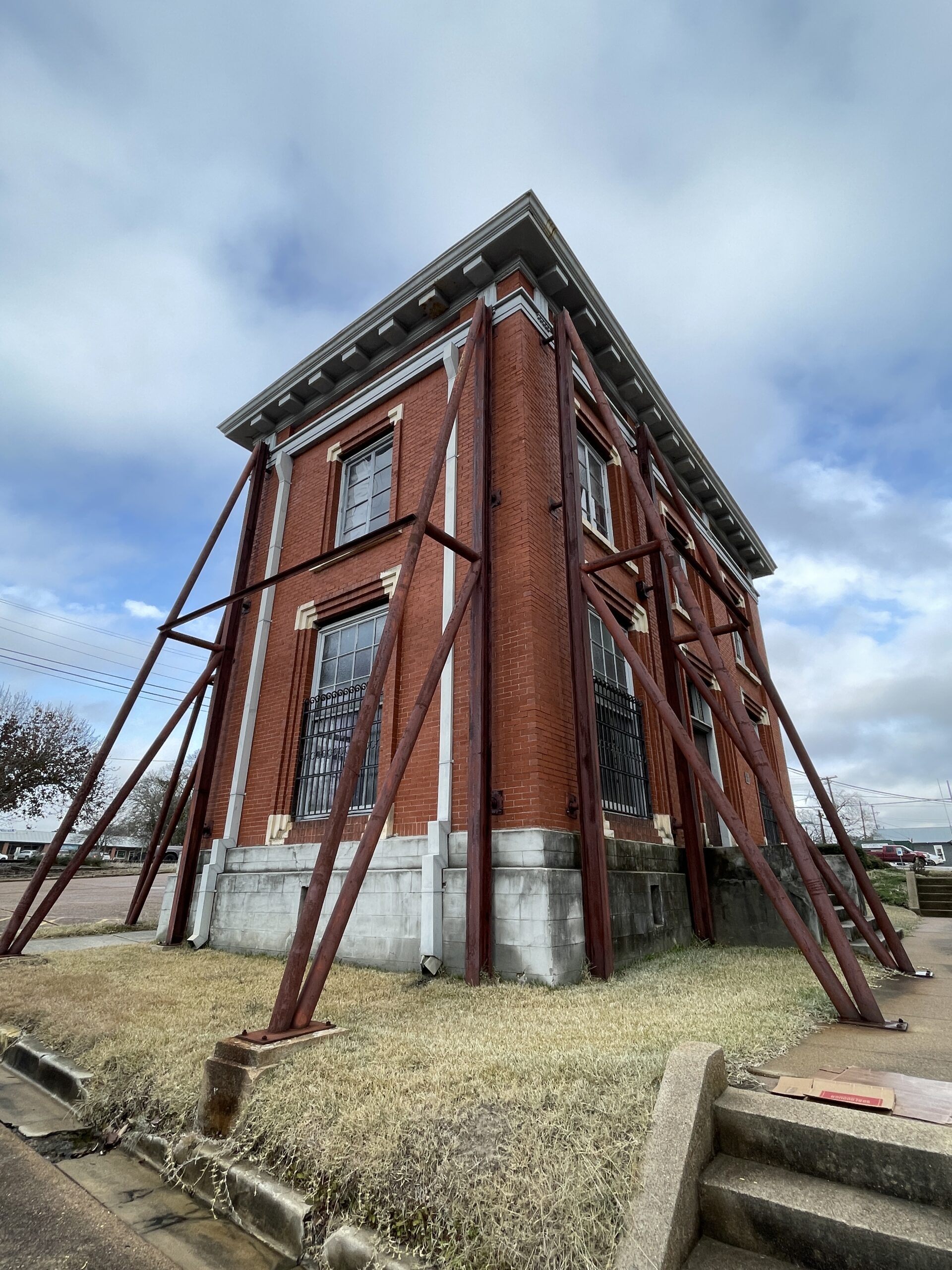
“In 1905, the Polk County Courthouse Annex (also known as the County Clerk Building) was built to house the County Clerk and County records on the southwest corner of the courthouse square. The 2-story building of locally produced brick was designed in a Classical Revival style by Houston architect Lewis Sterling Green. It was built by Henderson Shearer & Miller for $6,740.”
From the National Register narrative
“The Polk County Courthouse, designed by the Houston architectural firm of McLelland & Fink, was built in 1923-24 to answer the needs of a growing and prosperous county. Each elevation of the courthouse is similarly detailed and arranged, the major difference being that the wider north and south elevations of the building have seven bays while the narrower south and north elevations are five bays wide.
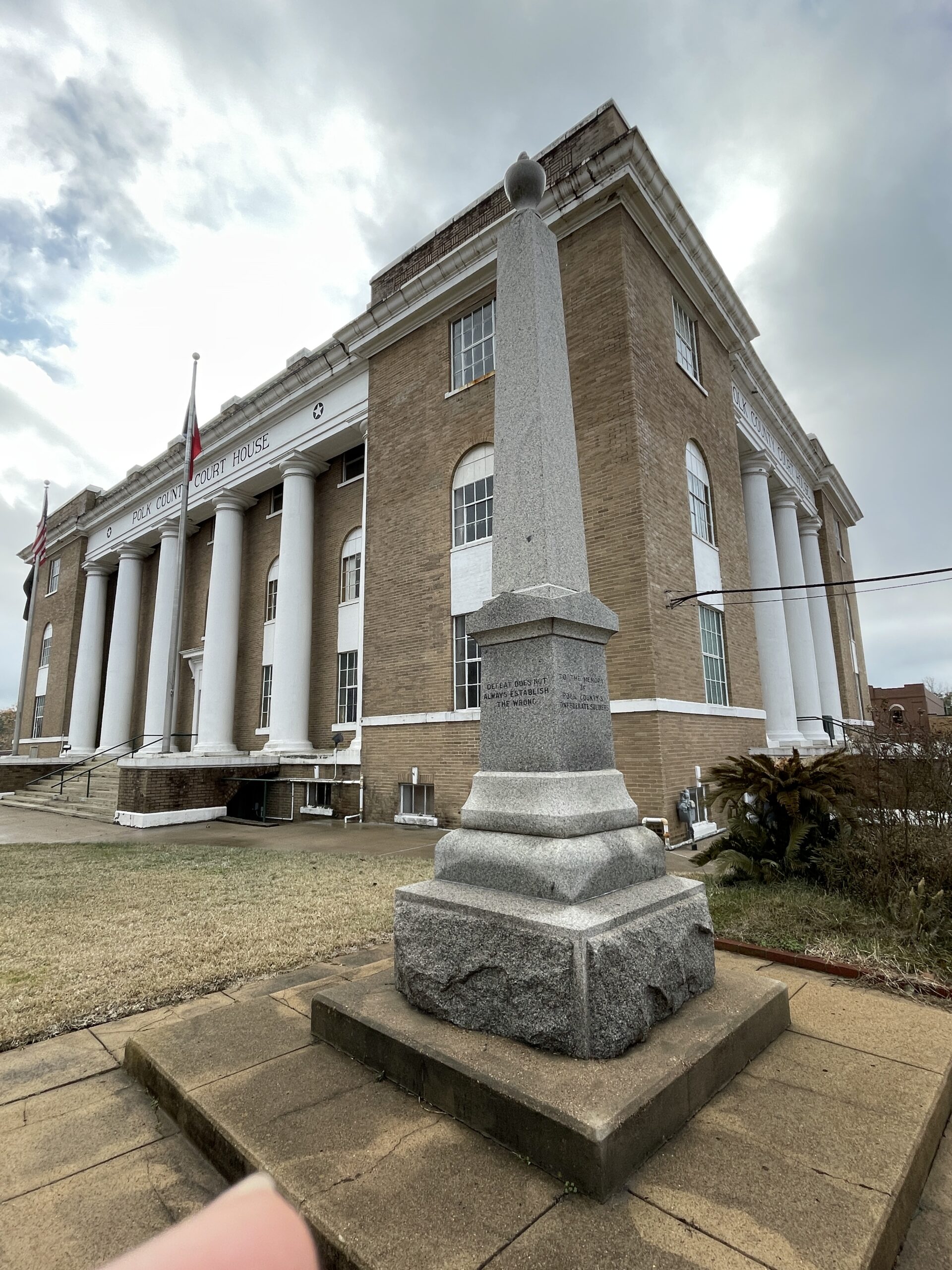
“The 3-story tan brick Classical Revival courthouse features a raised basement, a rectangular plan and a flat roof. The building reflects a simplified Beaux Arts classicism evident in the massive columns dominating the symmetrical facades, strong cornice-line balustrade, arched windows, rectangular plan, flat roof, lack of pediments, and a cross-axial plan.”
“Architect John McLelland was born in Greenock, Scotland, trained at the West of Scotland Technical College in Glasgow, graduated from the Academy of Fine Arts in Edinburgh, and migrated to Chicago in 1906. He left soon thereafter to work as an estimator at the Thompson Starrett Company in San Francisco, finding work during the rebuilding after the 1906 fire. After migrating to Portland, Oregon and Los Angeles, he settled in Houston in 1911, where he became a prolific designer of public schools. McLelland held the position of architect for the City of Houston in 1919-20, and died suddenly in 1929. Little is known about his partnership with Fink.”
From the National Register narrative