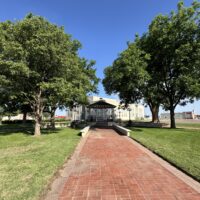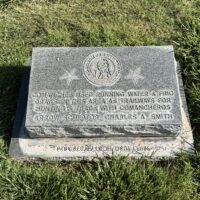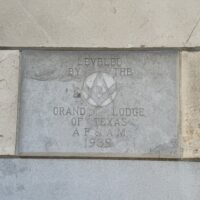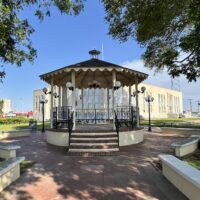


Year Built: 1939
Architect: Townes & Funk
The Castro County Courthouse is located in Dimmitt, Texas.
🏛️ Castro County Courthouse: Art Deco Resilience on the High Plains
Dimmitt, Texas — At the intersection of history, agriculture, and architectural ambition sits the Castro County Courthouse, a striking Art Deco structure that stands as a testament to the grit of the Texas Panhandle. Built during one of the region’s most difficult decades, this courthouse has quietly served as the civic and cultural cornerstone of Castro County for over 80 years.
A Depression-Era Symbol of Modern Governance
The current courthouse, completed in 1939, replaced an earlier wooden structure that had served the county since its founding in the 1890s. By the late 1930s, Castro County needed a facility that reflected its growth and could meet modern administrative demands.
Architect J.C. Berry—also credited with other Panhandle courthouses—designed the new building in the Art Deco style, a modernist departure from the Victorian and Classical forms common in early Texas courthouses. The project was funded in part by the Works Progress Administration (WPA), one of several New Deal programs aimed at jumpstarting the economy through infrastructure.
The building’s streamlined geometry, vertical piers, and native stone construction give it a grounded yet progressive aesthetic. It’s a structure that balances ambition with practicality—a common thread in Depression-era design across the plains.
A County Defined by Dust, Wheat, and Tenacity
Named for Henri Castro, a French empresario who helped colonize Texas under the Republic, Castro County developed as a hub of dryland farming and ranching. The courthouse was built during the depths of the Dust Bowl, when high winds and drought had devastated much of the Panhandle economy.
The courthouse thus became more than a seat of justice; it was a symbol of resilience. Locals gathered on the courthouse lawn for updates from visiting soil scientists, WPA administrators, and agricultural advisors. The building itself, sturdy and upright against the relentless wind, came to embody the quiet determination of the people it served.
Legal Footprints in the Dust
While Castro County has largely stayed out of the spotlight in statewide legal history, its courthouse has played a central role in water rights, property boundary disputes, and agricultural lease law—all foundational issues in Texas real estate. During the 1950s and ’60s, a series of quiet but consequential cases defined how absentee ownership and dryland leasing would be handled in High Plains counties.
More recently, the courthouse has been involved in matters tied to wind energy contracts and conservation easements—showing how land law continues to evolve in this rural landscape.
Still the Heart of the Community
Today, the courthouse remains the home of the District Court, County Clerk, Commissioners Court, and other county offices. Despite its age, the building continues to function as the epicenter of local government and civic life.
Inside, original terrazzo floors, steel-framed windows, and period light fixtures speak to the building’s 1930s heritage. The second-floor courtroom—modest but elegant—retains its original judge’s bench and wood-paneled walls. It’s not just a place for trials; it’s a space where local history quietly unfolds.
Outside, the courthouse lawn continues to host parades, memorial services, and school programs. It’s where young residents come to take prom photos and where older generations reflect on decades of civic change.
A Legal Eye: Architecture as Assertion
As a real estate lawyer, I’m always fascinated by courthouses built during the New Deal. The Castro County Courthouse doesn’t shout with ornamentation, but its clean lines and enduring materials communicate something powerful: public service matters, even in the hardest times.
Its Art Deco elements—subtle but assertive—suggest a forward-looking vision rooted in local pride. For me, buildings like this embody the intersection of legal stability and community continuity.
🔗 Visit the Official Site
To explore more about county services or its history, visit the official Castro County website.