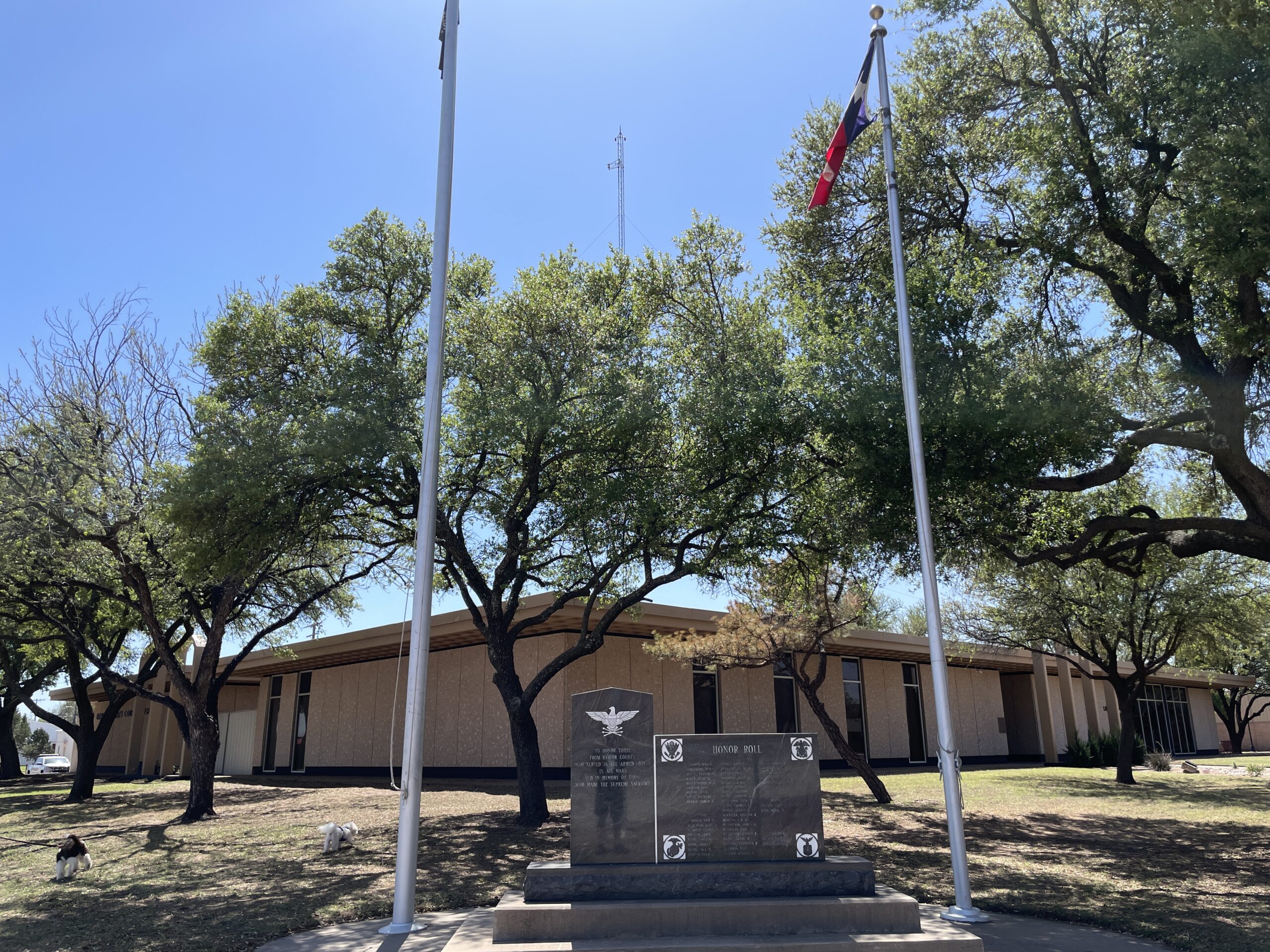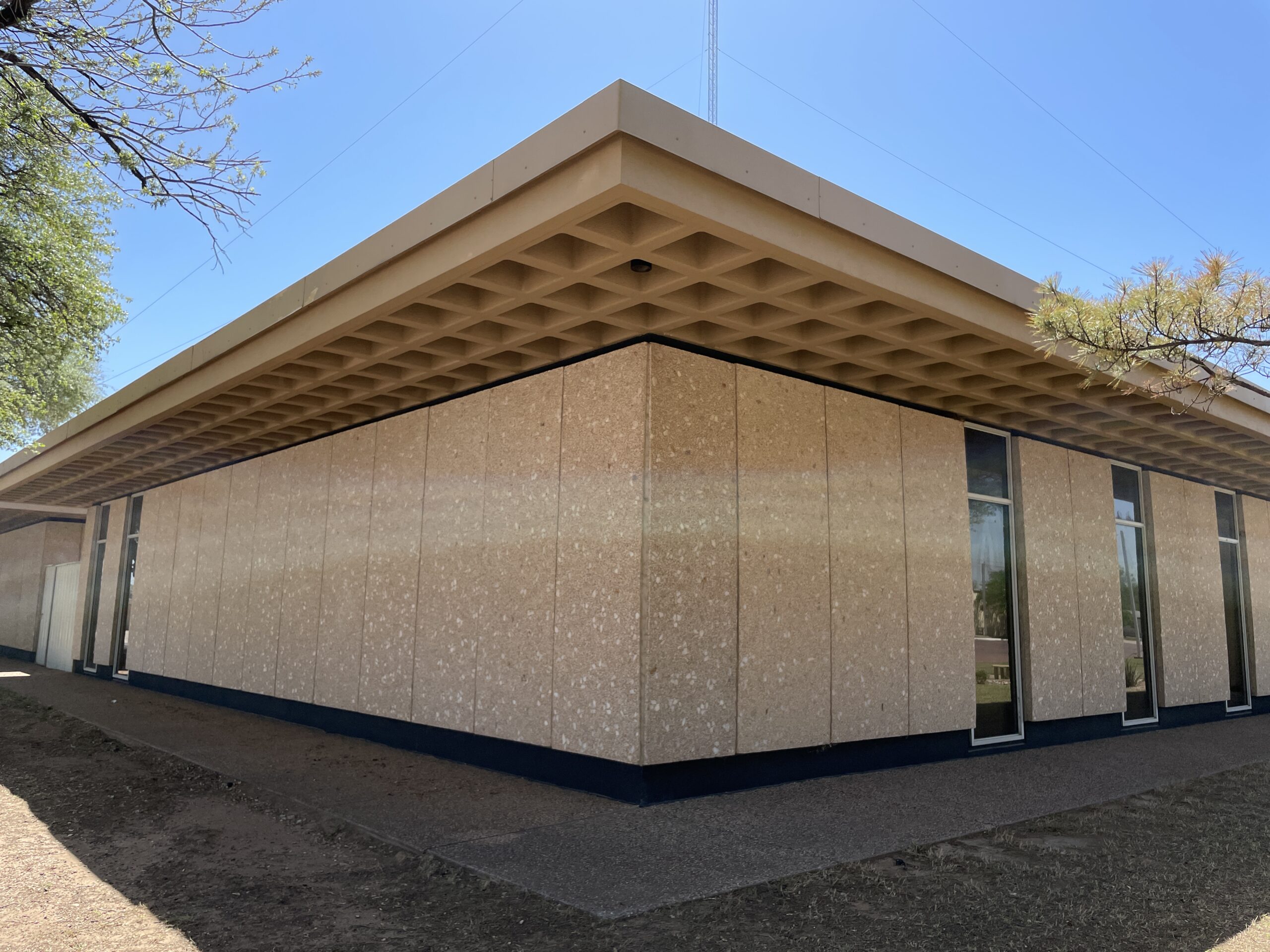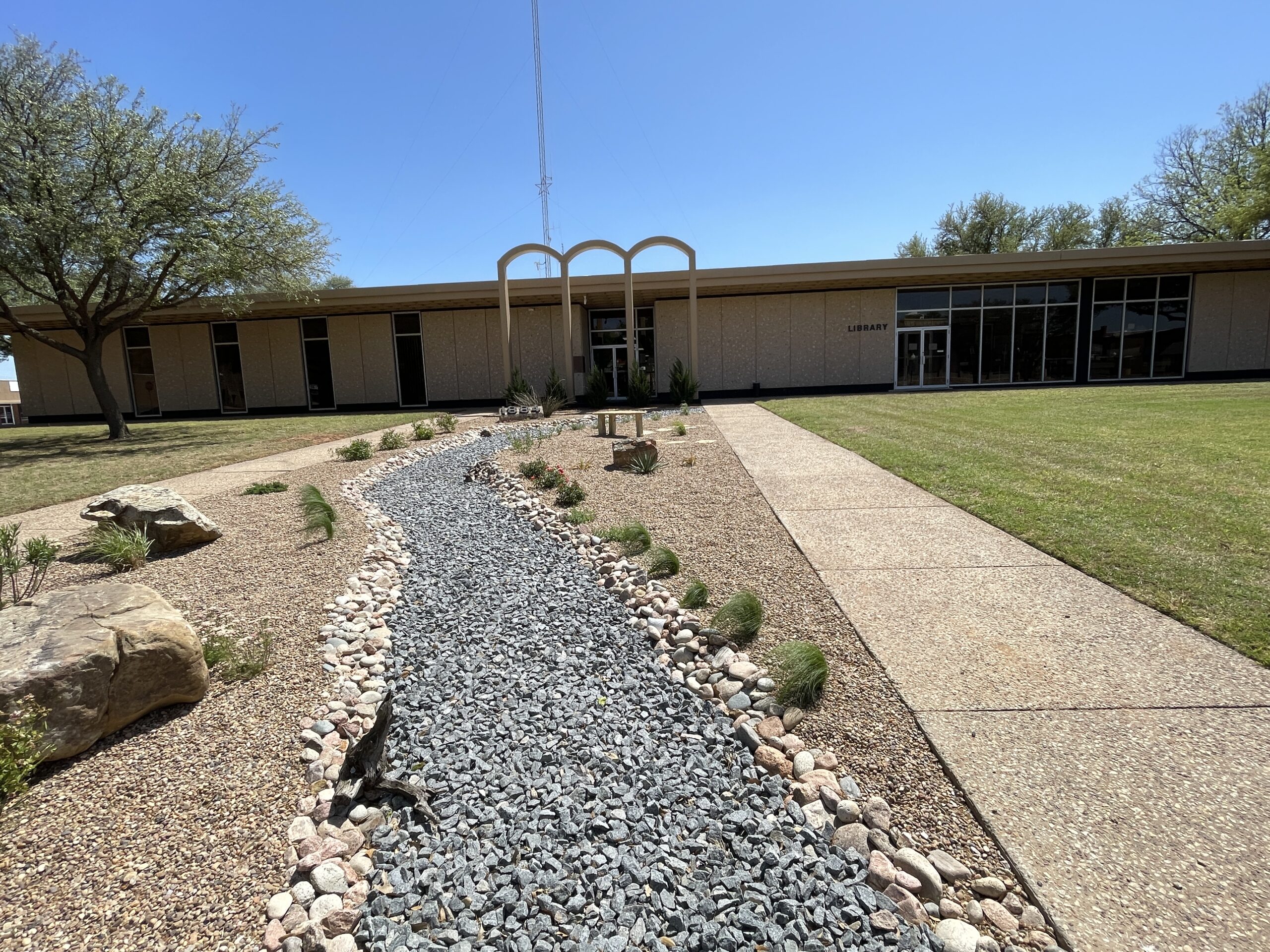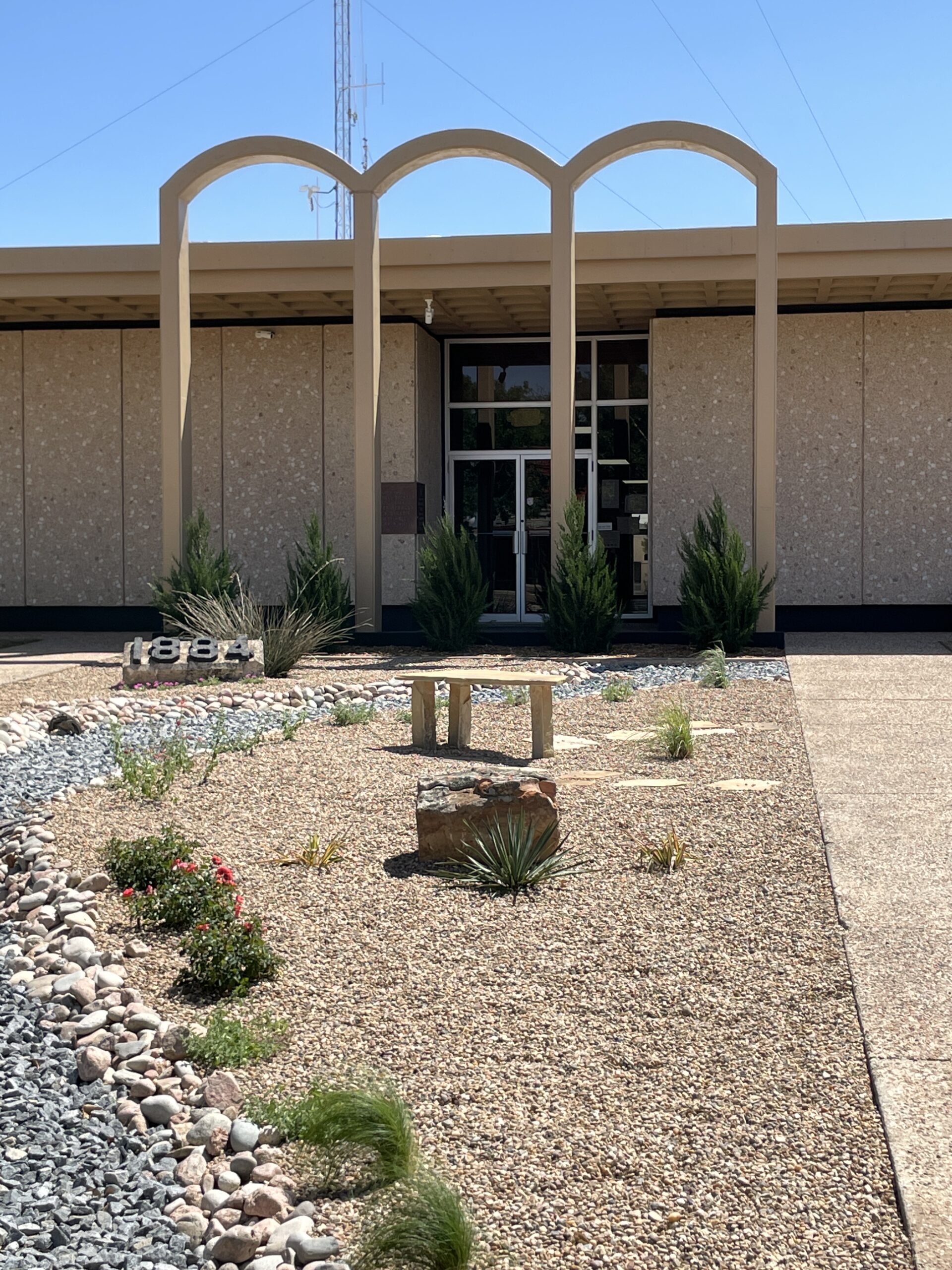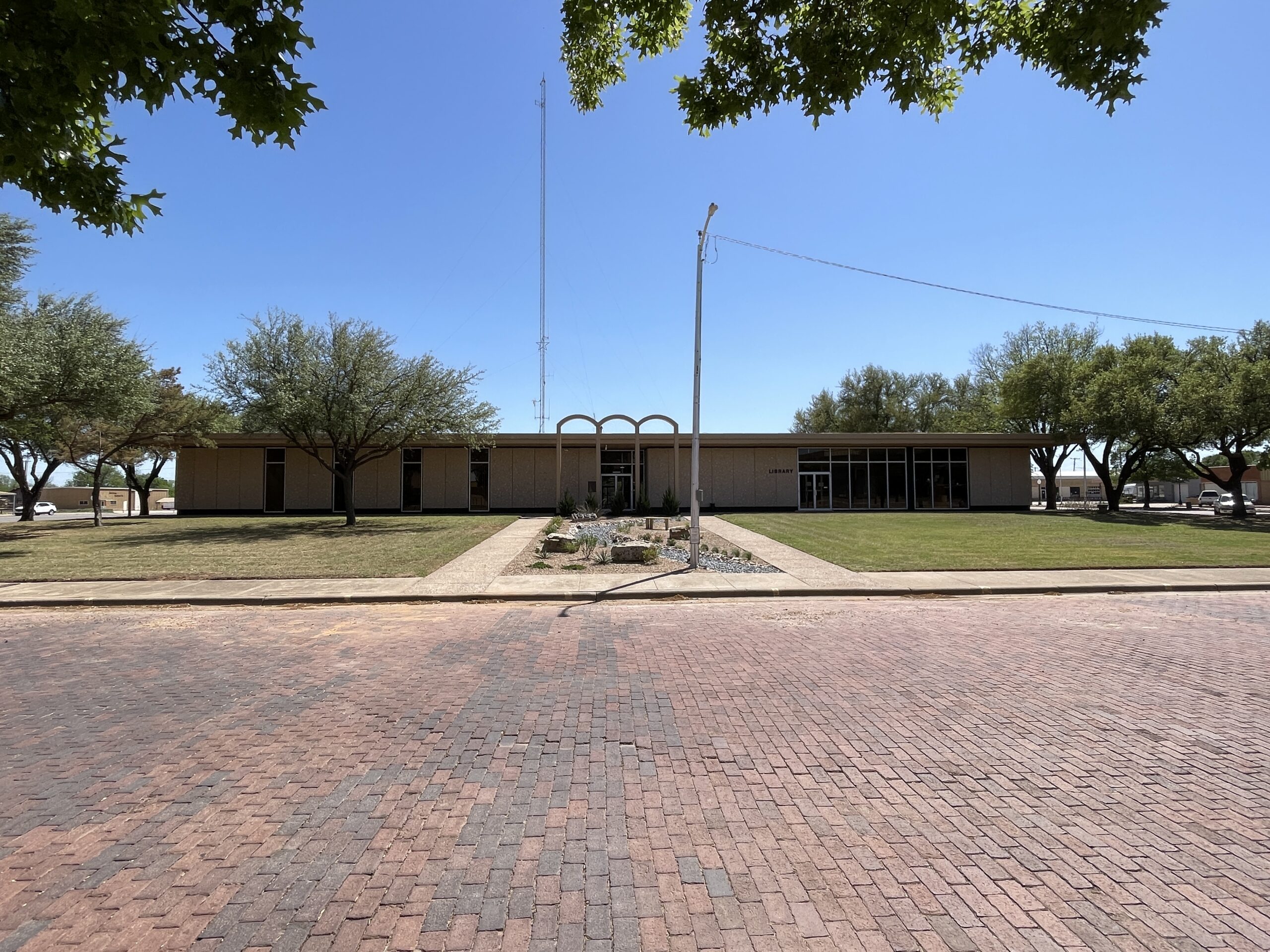
Year Built: 1968
Architect: Pierce, Norris & Pace
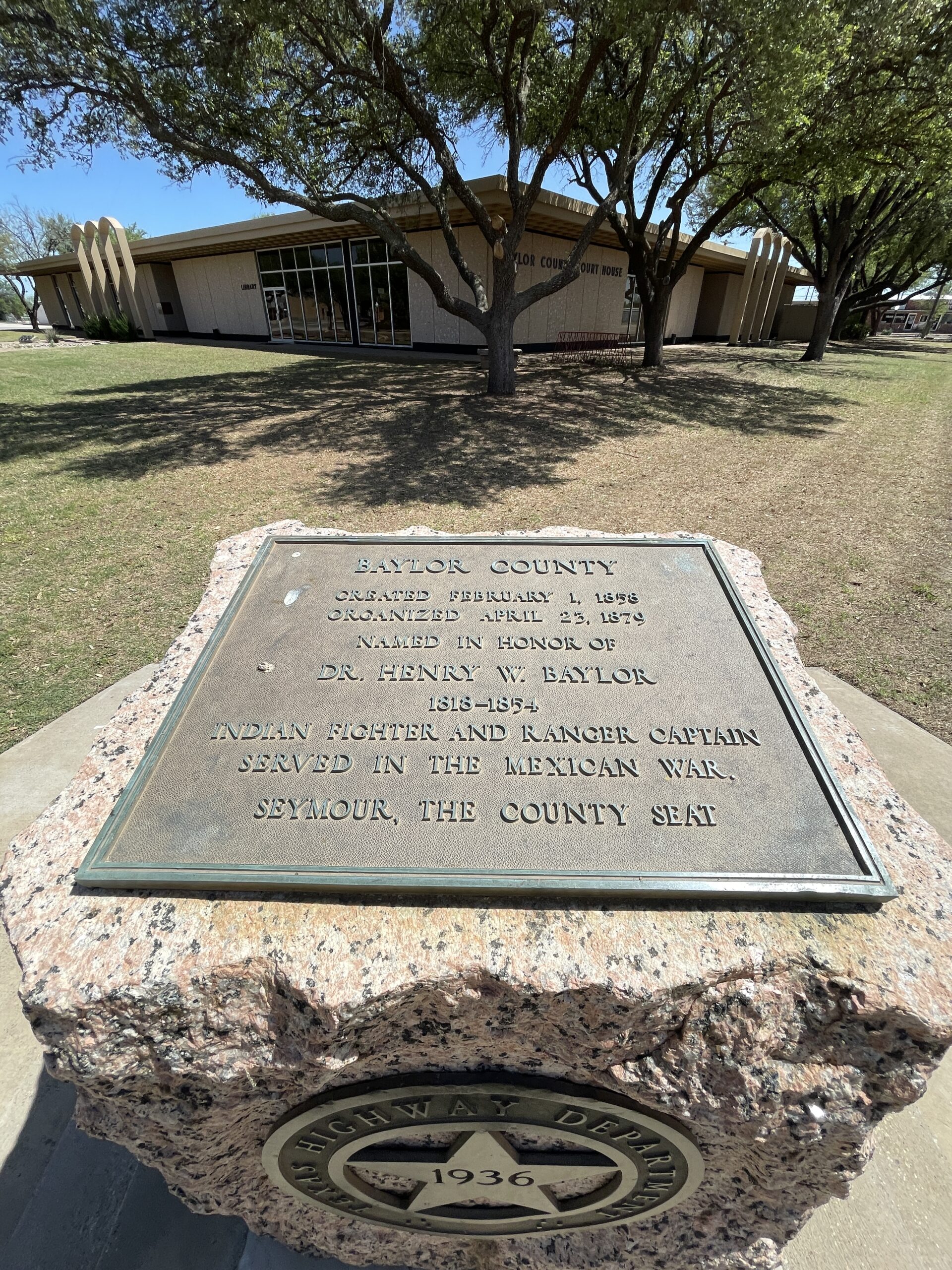
The Baylor County Courthouse was built in Seymour, Texas.
The county is named after Henry W. Baylor, a surgeon in the Texas Rangers during the Mexican–American War.
Seymour was called Oregon City by the settlers from Oregon who settled there. The area was first located where the Western Trail crossed the Brazos River just south of the townsite. In 1879 a post office was established there. That same year the town’s name was changed to a honor Seymour Munday, a local cowboy. The nearby town Munday was also named after him.
Seymour calls itself “the crossroads of North Texas” because it is located at the junction of five highways: U.S. highways 82, 277, 183, and 283, and State Highway 114.
On August 12, 1936, the temperature at Seymour reached 120 °F, the highest temperature ever recorded in Texas.
Lake Kemp covers 15,550 acres and has over 100 miles of shoreline!
Historical Marker 5766: Principal cattle trail from Texas to Kansas and beyond from 1876 to 1887; superseded the Chisholm Trial after Dodge City replaced Abilene as the main intermediate northern beef market. As its name implies, the Western Trail ran west of the Chisholm Trail, by about 100 miles. Most of its feeder trails started in South Texas, although some made connections at San Antonio and Fort Griffin. Here in Baylor County the trail crossed Brazos River, passing half a mile east of Seymour, a major supply center. The herds bedded near Seymour Creek, at the site of the present Fairgrounds. The Millett Ranch (established 1874) served as a watering spot, and the Millett Brothers–Eugene, Alzono, and Hiram– were among the first users of the trail. From Seymour the route continued north, leaving Texas at Doan’s Store on the Red River. It then ran through Oklahoma to Dodge City, with lesser extensions proceeding to Nebraska, Wyoming, and Montana. During its life, the Western Trail moved hundreds of thousands of cattle north to stock ranges, Indian reservations, and markets. But after the fencing of the open range and building of the Texas & Pacific Railroad, it ceased to be used by the cattle industry. (1972)